
Selecting Camshafts for your RB26
Raw Brokerage is your one stop shop for all Nissan related products as well as the knowledge base on building the best performing engine.
Step 1: Verify your cam angle sensor.
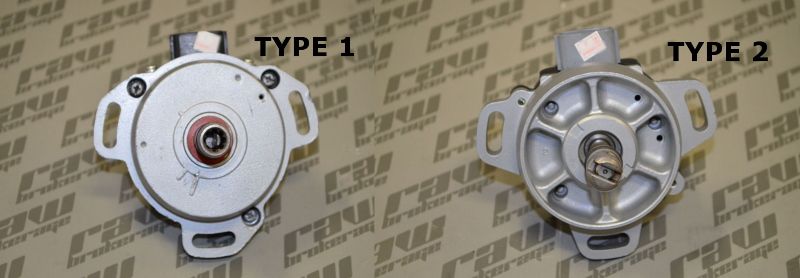
Check to see which cam angle sensor (CAS) you have on your engine to narrow down compatible camshafts. The main difference is the camshaft drive design as seen in the illustrated comparison. Raw Brokerage classifies these into two types:
-
Type-1 sensors are full aluminum in construction. The cam drive has a female spline drive with a male half moon.
-
Type-2 sensors are a combination of both aluminum body and a plastic cover. The cam drive has a pair of male half moons with an offset slot in the center.
-
Step 1: Verify your cam angle sensor.
Check to see which cam angle sensor (CAS) you have on your engine to narrow down compatible camshafts. The main difference is the camshaft drive design as seen in the illustrated comparison. Raw Brokerage classifies these into two types:
-
Type-1 sensors are full aluminum in construction. The cam drive has a female spline drive with a male half moon.
-
Type-2 sensors are a combination of both aluminum body and a plastic cover. The cam drive has a pair of male half moons with an offset slot in the center.
-
Step 1: Verify your cam angle sensor.
Check to see which cam angle sensor (CAS) you have on your engine to narrow down compatible camshafts. The main difference is the camshaft drive design as seen in the illustrated comparison. Raw Brokerage classifies these into two types:
-
Type-1 sensors are full aluminum in construction. The cam drive has a female spline drive with a male half moon.
-
Type-2 sensors are a combination of both aluminum body and a plastic cover. The cam drive has a pair of male half moons with an offset slot in the center.
-
Step 1: Verify your cam angle sensor.
Check to see which cam angle sensor (CAS) you have on your engine to narrow down compatible camshafts. The main difference is the camshaft drive design as seen in the illustrated comparison. Raw Brokerage classifies these into two types:
-
Type-1 sensors are full aluminum in construction. The cam drive has a female spline drive with a male half moon.
-
Type-2 sensors are a combination of both aluminum body and a plastic cover. The cam drive has a pair of male half moons with an offset slot in the center.
-
Step 2: Drop-in or machine the cylinder head.
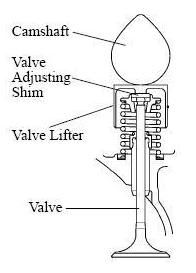
The factory lift is 8.58mm on the intake camshaft and 8.28mm on the exhaust camshaft.
-
The maximum lift you're able to run on a factory cylinder head casting is 9.35mm before your camshaft lobe makes contact with the cylinder head.
-
Any camshaft less than 9.35mm of lift while retaining a factory size base circle can be considered a drop in camshaft.
Step 2: Drop-in or machine the cylinder head.
The factory lift is 8.58mm on the intake camshaft and 8.28mm on the exhaust camshaft.
-
The maximum lift you're able to run on a factory cylinder head casting is 9.35mm before your camshaft lobe makes contact with the cylinder head (see picture).
-
Any camshaft less than 9.35mm of lift while retaining a factory size base circle can be considered a drop in camshaft.
Step 2: Drop-in or machine the cylinder head.
The factory lift is 8.58mm on the intake camshaft and 8.28mm on the exhaust camshaft.
-
The maximum lift you're able to run on a factory cylinder head casting is 9.35mm before your camshaft lobe makes contact with the cylinder head (see picture).
-
Any camshaft less than 9.35mm of lift while retaining a factory size base circle can be considered a drop in camshaft.
Step 2: Drop-in or machine the cylinder head.
The factory lift is 8.58mm on the intake camshaft and 8.28mm on the exhaust camshaft.
-
The maximum lift you're able to run on a factory cylinder head casting is 9.35mm before your camshaft lobe makes contact with the cylinder head (see picture).
-
Any camshaft less than 9.35mm of lift while retaining a factory size base circle can be considered a drop in camshaft.
Step 2: Drop-in or machine the cylinder head.
The factory lift is 8.58mm on the intake camshaft and 8.28mm on the exhaust camshaft.
-
The maximum lift you're able to run on a factory cylinder head casting is 9.35mm before your camshaft lobe makes contact with the cylinder head (see picture).
-
Any camshaft less than 9.35mm of lift while retaining a factory size base circle can be considered a drop in camshaft.
Step 2: Drop-in or machine the cylinder head.
The factory lift is 8.58mm on the intake camshaft and 8.28mm on the exhaust camshaft.
-
The maximum lift you're able to run on a factory cylinder head casting is 9.35mm before your camshaft lobe makes contact with the cylinder head (see picture).
-
Any camshaft less than 9.35mm of lift while retaining a factory size base circle can be considered a drop in camshaft.
Step 1: Verify your cam angle sensor.
Check to see which cam angle sensor (CAS) you have on your engine to narrow down compatible camshafts. The main difference is the camshaft drive design as seen in the illustrated comparison. Raw Brokerage classifies these into two types:
-
Type-1 sensors are full aluminum in construction. The cam drive has a female spline drive with a male half moon.
-
Type-2 sensors are a combination of both aluminum body and a plastic cover. The cam drive has a pair of male half moons with an offset slot in the center.
-
Step 1: Verify your cam angle sensor.
Check to see which cam angle sensor (CAS) you have on your engine to narrow down compatible camshafts. The main difference is the camshaft drive design as seen in the illustrated comparison. Raw Brokerage classifies these into two types:
-
Type-1 sensors are full aluminum in construction. The cam drive has a female spline drive with a male half moon.
-
Type-2 sensors are a combination of both aluminum body and a plastic cover. The cam drive has a pair of male half moons with an offset slot in the center.
-
Step 3: More aggressive camshafts
If you're desiring additional duration and lift in your valvetrain additional machine work and cylinder head components are required to properly install more aggressive camshafts.
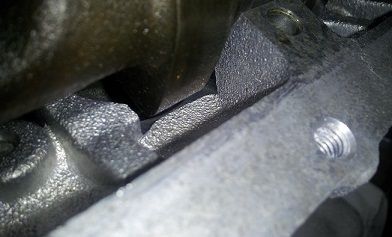
Camshafts exceeding the above mentioned 9.3mm of lift requires the casting around the camshaft lobes to be machined to provide extra clearance (see picture). The factory base circle on the camshafts are 32mm. As long as the camshafts maintain the factory base circle diameter you'll be able to use your factory (of factory replacement) lifter buckets.
Step 4: Full upgrade
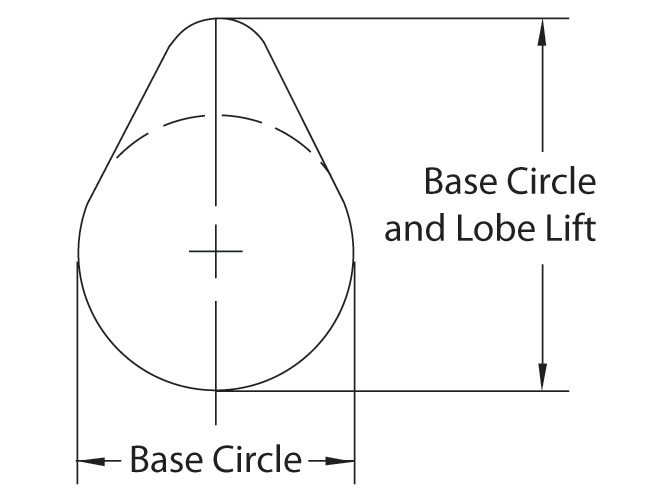
When considering camshafts with even higher duration and lift the base circle of the camshaft is reduced (see picture). To compensate for the difference in lash tolerance a taller lifter bucket is required.
Still need additional assistance?
Feel free to speak to one of our performance specialist.